
A ban on US-based high-frequency trader (HFT) Jane Street did little to dent activity in the derivatives segment, with July volumes rising 10 per cent month-on-month to an eight-month high. Analysts and experts said the jump may have come from proprietary and retail traders, spurred by a spike in market volatility.

The National Stock Exchange (NSE) has deferred its plan to change the expiry day of all index and stock derivatives to Monday from Thursday until further notice following markets regulator Sebi's consultation paper. The shift, which was scheduled to take effect on April 4, 2025, would have seen all index and stock derivative contracts move from Thursday to Monday.

The Securities and Exchange Board of India (Sebi) on Wednesday overhauled the cost framework for the 80 trillion domestic mutual fund (MF) industry, introducing a simplified structure aimed at improving transparency for investors while balancing the impact on asset managers.

The Reserve Bank of India (RBI), in its Financial Stability Report (FSR), cautioned that stress tests indicate two scheduled commercial banks (SCBs) may have to dip into their capital conservation buffers (CCBs), unless stakeholders infuse capital, under a scenario involving a gradual slowdown in domestic GDP growth and a moderate rise in inflation, with limited policy easing space available to the central bank.

Equity markets fell on Monday, with benchmark indices recording their worst session in over two months amid caution ahead of the US Federal Reserve's (Fed's) policy announcement and renewed uncertainty over the US-India trade deal. Sustained selling by foreign portfolio investors (FPIs) also weighed on sentiment.

'...not merely in managing fiscal mathematics, but in demonstrating conservatism and prudence within that framework.' 'Looking forward, we believe sufficient growth drivers exist -- ranging from government reforms to revival in consumption to favourable monsoons. Numerous factors support the Indian economy.'

From the Sensex pack, Eternal, Bharat Electronics Ltd, Trent, Axis Bank, State Bank of India, Bajaj Finance, Sun Pharmaceuticals, Asian Paints, Adani Ports, Hindustan Unilever, Reliance Industries, ITC, PowerGrid, Tata Motors Ltd's Commercial Vehicles business, and Bajaj Finserv were the gainers. Infosys, Tata Motors Passenger Vehicles, Tata Steel, ICICI Bank, Tech Mahindra, Titan, UltraTech Cement, Maruti Suzuki India, and Larsen & Toubro were the laggards.

Unless the primary market momentum slows, smallcap stocks will stay subdued.

The National Stock Exchange (NSE) on Monday said it will conduct a special Muhurat trading session on Tuesday, October 21, to mark the festival of Diwali.

Leading stock exchange the BSE on Thursday announced the discontinuation of weekly index derivatives contracts on Sensex 50 and Bankex, following a new directive from markets regulator Sebi. In its circular, BSE said weekly index derivatives contracts on the Sensex 50 will be discontinued from November 14 after the expiry of existing contracts. No new weekly contracts will be generated.

Global trends, tariff-related updates and trading activity of foreign investors would be the key drivers for the equity market movement this week, analysts said. Markets witnessed a strong rebound last week, with the benchmark indices surging over 4 per cent.

Assessing where their funds are flowing gives traders a hidden edge in predicting the market direction and momentum.

The derivatives trading volume has seen a 37 per cent month-on-month decline in December following a slew of measures undertaken by the market regulator Securities Exchange Board of India (Sebi) to curb the frenzy in the derivatives segment. The average daily turnover (ADTV) for the derivatives segment (notional turnover for options segment) so far this month is at Rs 280 trillion - the lowest since June 2023-compared to Rs 442 trillion in November.

Mint Road's proposals on banks' M&A funding are cautious even as entrants root for more elbow room, and weigh business models.

'It takes time and the experience of a few market cycles to develop awareness about one's true risk appetite.'
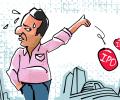
India's equity markets may have expanded rapidly, but initial public offerings (IPOs) are increasingly becoming exit vehicles for early investors rather than as engines for raising long-term capital, a shift that undermines the spirit of public markets, Chief Economic Advisor V Anantha Nageswaran warned on Monday at a CII event.

National Stock Exchange (NSE) chief Ashishkumar Chauhan on Friday cautioned retail investors against trading in derivatives and suggested them to invest in equities through mutual fund route. He emphasized that trading in Futures & Options (F&O) derivatives should be limited to informed investors who can manage risk and comprehend the market. Recently, Finance Minister Nirmala Sitharaman and chief economic advisor V Anantha Nageswaran flagged the growing risk of F&O trading for retail investors.

The settlement cycle for cash, derivatives, and securities lending and borrowing mechanism (SLBM) segments has been revised after September 5 and September 8 were declared as settlement holidays by clearing corporations, markets regulator Sebi said on Monday.

Ask rediffGURU Naveenn Kummar your insurance mutual fund and personal finance-related questions.

Marico is expected to post high single-digit volume growth in the India business in the July-September quarter. However, it is expected to moderate sequentially, the company said in its quarterly update on exchanges.


Capital markets regulator Sebi has rejected a proposal by the National Stock Exchange (NSE) to extend the trading hours in the equity derivatives segment citing a lack of feedback from the stock brokers community. "Currently, there is no plan to extend the timings as Sebi has returned our application as the stock brokers have not given the feedback that Sebi wanted. "So, as of now, the extended time frame (plan) is shelved," NSE MD and CEO Ashishkumar Chauhan said in a post-earnings analysts call.

The National Stock Exchange (NSE) and BSE on Tuesday said they will conduct a special trading session in the equity and equity derivative segments on May 18 to check their preparedness for handling major disruptions or failure at the primary site. The special live trading session will have an intra-day switchover from the Primary Site (PR) to the Disaster Recovery (DR) site.
With volatility persisting, Warren Buffet's description of derivatives is turning out to be more and more apt, says A V Rajwade.
Leading stock exchange NSE on Tuesday reported a 94 per cent year-on-year surge in consolidated profit after tax to Rs 3,834 crore for three months ended December 2024. It posted a Profit After Tax (PAT) of Rs 1,975 crore in the year-ago period.

Stock markets will be driven by RBI's interest rate decision, tariff-related developments, global trends and trading activity of foreign investors in this holiday-shortened week, analysts said.

Metropolitan Stock Exchange of India (MSE) plans to raise Rs 120 crore from investors in an attempt to stay afloat. The beleaguered exchange's board has approved issuance of 1.19 billion equity shares of face value Rs 1 at a premium of Rs 1 through private placements, according to a disclosure on its website.

The surge in the market price is also attributed to demand by retail and high-networth individual investors ahead of the IPO.

SEBI's blockbuster reforms are rewriting the rules of mutual fund investing -- faster growth, sharper transparency, and smarter safeguards that put investors first, explains Ramalingam Kalirajan.

The expansion in equity market volumes is driven by retail speculators indulging in heavy trading of complex derivatives that are economically unproductive, say Praveen Chakravarthy and T V Somanathan.

The new proposal comes close on the heels of six measures introduced by Sebi to curb frenzy in index derivatives.
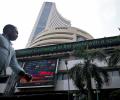
BSE on Monday relaunched Sensex and Bankex derivative contracts in its bid to boost derivative trading at the country's premier bourse. The relaunch of derivative contracts comes with a reduced lot size of futures and options and a new expiry cycle of Friday from Thursday earlier, BSE said. Derivatives are considered to be high-risk-reward financial instruments aimed at hedging risk in the equity market.

Before considering reducing the freedom of private investors in the derivatives market, we need to check if the maladies in markets elsewhere exist in India, says Susan Thomas.
Among 30 Sensex firms, UltraTech Cement, Tech Mahindra, HCL Tech, Tata Consultancy Services, Eternal, Asian Paints, Tata Steel and Kotak Mahindra Bank were among the biggest gainers. Tata Motors, Adani Ports and Sun Pharma were the laggards.

Retail investors have become a force to reckon with in the last 10 years with their ownership of Indian equities rising 800 basis points, or 8 per cent, to 23.4 per cent during this period, suggests a recent note from Morgan Stanley. This number, Morgan Stanley said, is set to rise in the next few years as Indian households are still underinvested in equities. India's demographics, policy framework, investor education and modest positive real rates, it said, will fuel the 'equity cult' in India.

From the Sensex firms, Hindustan Unilever, Kotak Mahindra Bank, Trent, Reliance Industries, Asian Paints and ITC were among the gainers. However, Bharat Electronics Ltd, Tech Mahindra, UltraTech Cement, Maruti and Eternal were among the laggards.

Tasting success with the relaunch of Sensex derivatives in the onshore market, BSE is preparing for the 'offshore' debut of its 30-share index, which has become synonymous with the domestic markets. Sources in the know said that the India International Exchange (India INX), a subsidiary of BSE, received approval in July from the International Financial Services Centres Authority (IFSCA) to launch Sensex 30 derivatives contracts.

Among the Sensex firms, Tata Steel, Tata Motors, Asian Paints, Wipro, State Bank of India and Larsen & Toubro were the major gainers. ICICI Bank, NTPC, Axis Bank and Mahindra & Mahindra were among the laggards.

The story of the Bombay Stock Exchange and the people who shaped its growth: From wars and bomb blasts to speculators, reformers and wealth creators.

Conservative investors seeking equity-like tax benefits with low risk may go for them.
 © 2026 Rediff.com - Advertise with us - Disclaimer - Privacy Policy - Sitemap - Feedback - About us - Terms of use - Grievances